How to Choose the Right Plate Rolling Machine | 2026 Buyer's Guide
Learn how to select the perfect plate rolling machine for your workshop. Compare 3-roll mechanical, universal hydraulic, and 4-roll CNC models based on thickness and precision.
How to Choose the Right Plate Rolling Machine: A Comprehensive Guide
Selecting the right plate rolling machine is one of the most critical decisions for any metal fabrication workshop. The wrong choice can lead to production bottlenecks, while the right one can significantly boost your ROI. To choose correctly, you must first define your technical requirements, including plate dimensions, material yield strength, and the required precision of the finished cylinder.
1. Understanding the Three Main Machine Types
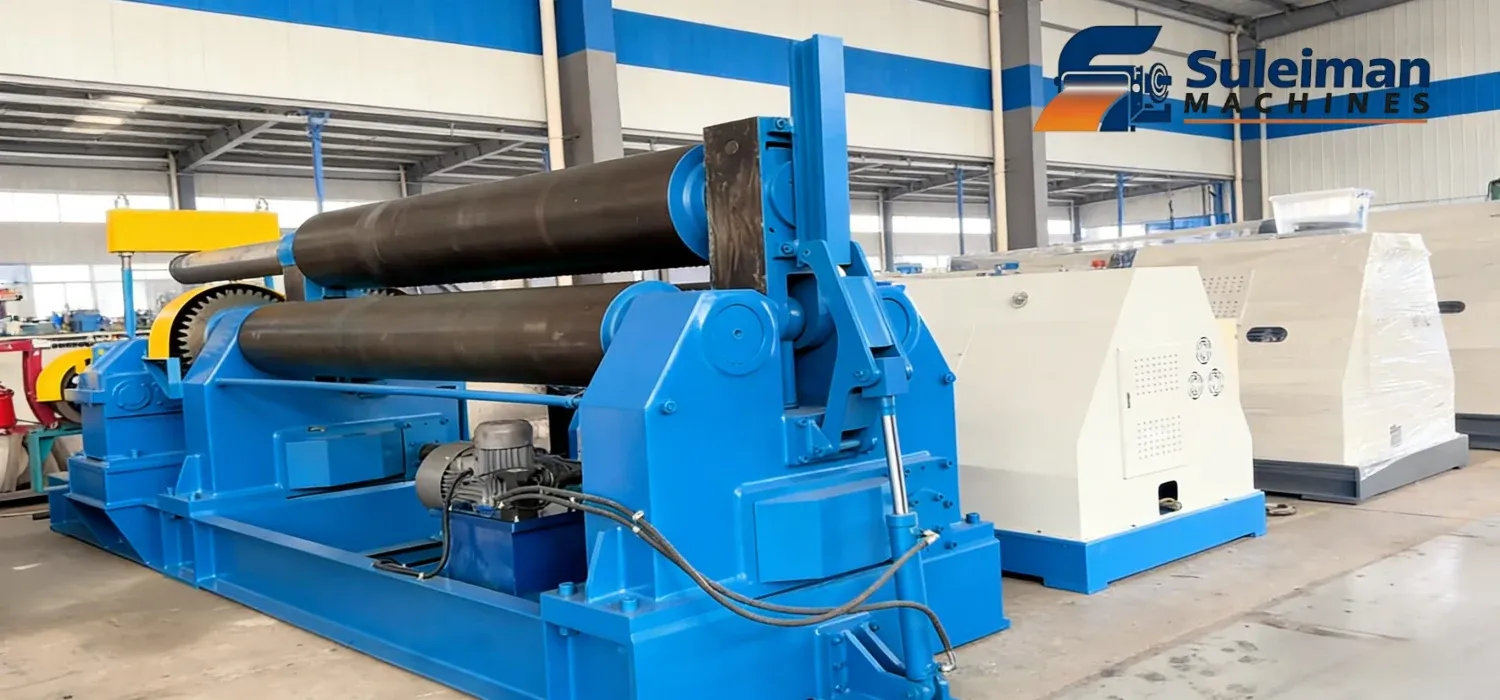
A. 3-Roll Mechanical Symmetrical (W11 Series)
Best for: Economy-focused projects and large-diameter cylinders.
This is the most cost-effective solution for general rolling. However, it lacks a pre-bending function. If your project does not require high precision at the edges and you are working with a limited budget, the mechanical 3-roll is a robust and reliable choice.
B. Upper-Roll Universal Hydraulic (W11S Series)
Best for: Medium to heavy plate fabrication and complex shapes.
The W11S Series features an upper roller that can move both vertically and horizontally, allowing for precise pre-bending of plate ends. It is the preferred choice for manufacturing pressure vessels and industrial tanks where minimizing "flat ends" is essential for high-quality welding.
C. 4-Roll CNC Series (W12 Series)
Best for: High efficiency, automation, and small-diameter rolling.
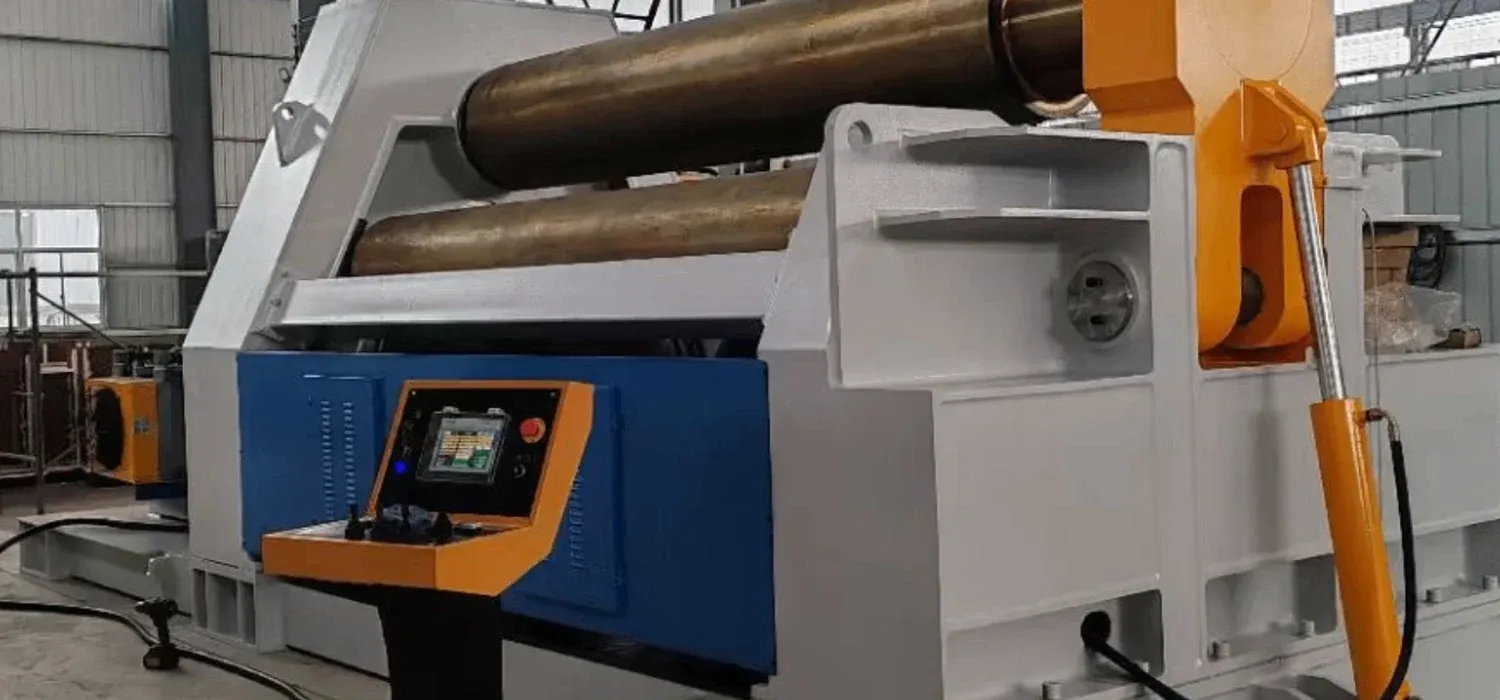
If you need "one-pass" forming—completing pre-bending and rolling in a single cycle—the W12 4-Roll CNC machine is the ultimate solution. It is ideal for high-volume production lines requiring extreme repeatability, perfect roundness, and minimal manual intervention.
2. Matching Machine Capacity to Material
The model of a plate rolling machine is determined by the width, thickness, and yield strength of the material. At SLM Forming, we categorize our standard models into three ranges:
- Thin Sheet Rolling: Models designed for 4mm, 6mm, and 8mm thickness.
- Medium Plate Rolling: Models for 12mm, 16mm, 20mm, and 25mm thickness.
- Heavy-Duty Rolling: Specialized machines for 30mm up to 160mm+ thickness.
Expert Tip: Always provide your material's Yield Strength (e.g., Q235 vs Q355). A 20mm high-yield plate often requires a machine rated for 25mm or 30mm standard carbon steel to ensure accurate calibration.
3. The Golden Rule: "Buy with a Margin"
One of the most common mistakes is buying a machine that only meets your maximum load requirements. To ensure long-term equipment life and handle fluctuations in plate quality, we recommend the "Margin Principle." Never operate your machine at 100% capacity for extended periods. Buying a machine with a slightly higher rating than your maximum requirement ensures better rolling precision and structural durability.
Contact SLM Forming for a Technical Consultation
Not sure which model fits your project? Provide us with your plate thickness, width, and material type, and our engineering team will provide a customized solution within 2 hours.
Contact Us via WhatsAppEmail: info@slmforming.com | Website: www.slmforming.com